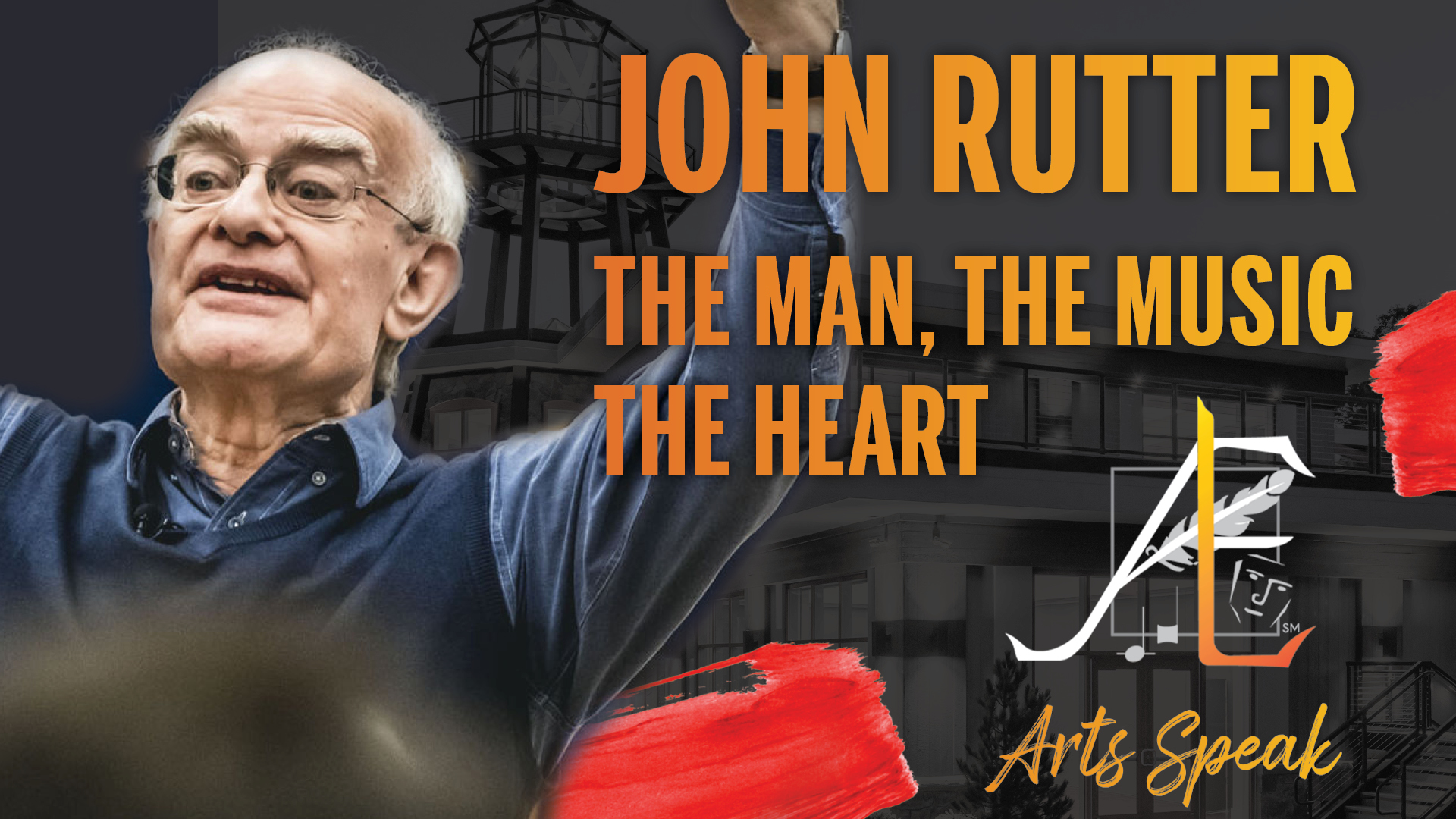
John Rutter: the Man, the Music, the Heart
Saturday, September 19, 2026, 3:30 PM
Online Only
Online Only
About the Lecture
A special interview with the beloved British composer and conductor, just in time for his 81st birthday. John will speak of his love for music, and the power of music to literally create harmony, bringing people together—exactly what humans need in times of division and strife.
A special interview with the beloved British composer and conductor, just in time for his 81st birthday. John will speak of his love for music, and the power of music to literally create harmony, bringing people together—exactly what humans need in times of division and strife.
About John Rutter, British Composer and Conductor
I’ve known I wanted to be a musician ever since I could walk and talk, and the story is true that I first discovered music at home when I lifted the lid of the old upright piano in my parents’ London apartment and started to prod the keys, while at nursery school I sang along loudly with all the other kids at morning assembly each day. My bewildered parents, probably driven crazy by the hours of piano improvisation and piping treble singing they endured, thought that if you can’t stop it at least get him to do it better, so they sent me at age seven for piano lessons where my piano teacher told me to be a composer, or singer (or anything but please not a pianist). Fortunately, the boys’ school my parents sent me to had a strong musical tradition, with daily choral worship led by the choir (I needed no second bidding to join) – and the director of music, Edward Chapman, was himself a gifted composer, a pupil in his Cambridge days of Charles Wood (a name that church musicians will know). He encouraged all of us to think composition was normal, ran a fine school choir and orchestra, and pointed my footsteps in the direction of Cambridge University, where I met David Willcocks, the legendary director of King’s College Choir, who took an interest in my compositions, encouraged me to conduct, and recommended me to Oxford University Press, who signed me up while I was still a student and have been my publisher ever since. I’m not sure where the intervening years have all gone, but in a way I’m still that kid doodling at the piano with his inventions, only now I get paid for it. I compose, conduct, produce recordings, and try to cope with the flood of commitments that a musician’s life involves. Someday I’ll get round to some hobbies.
I’ve known I wanted to be a musician ever since I could walk and talk, and the story is true that I first discovered music at home when I lifted the lid of the old upright piano in my parents’ London apartment and started to prod the keys, while at nursery school I sang along loudly with all the other kids at morning assembly each day. My bewildered parents, probably driven crazy by the hours of piano improvisation and piping treble singing they endured, thought that if you can’t stop it at least get him to do it better, so they sent me at age seven for piano lessons where my piano teacher told me to be a composer, or singer (or anything but please not a pianist). Fortunately, the boys’ school my parents sent me to had a strong musical tradition, with daily choral worship led by the choir (I needed no second bidding to join) – and the director of music, Edward Chapman, was himself a gifted composer, a pupil in his Cambridge days of Charles Wood (a name that church musicians will know). He encouraged all of us to think composition was normal, ran a fine school choir and orchestra, and pointed my footsteps in the direction of Cambridge University, where I met David Willcocks, the legendary director of King’s College Choir, who took an interest in my compositions, encouraged me to conduct, and recommended me to Oxford University Press, who signed me up while I was still a student and have been my publisher ever since. I’m not sure where the intervening years have all gone, but in a way I’m still that kid doodling at the piano with his inventions, only now I get paid for it. I compose, conduct, produce recordings, and try to cope with the flood of commitments that a musician’s life involves. Someday I’ll get round to some hobbies.
About the Series:
Arts Speak is an educational series of lectures and performance lectures that celebrates the power of creativity through arts and music. Join us in person or tune in virtually to explore, learn, and connect on a wide variety of topics surrounding Arts and music with renowned experts. Presenters have included Dr. Samuel Adler, Susan Rogers, Michael Burritt, M. T. Anderson, and Ēriks Ešenvalds.
Arts Speak is an educational series of lectures and performance lectures that celebrates the power of creativity through arts and music. Join us in person or tune in virtually to explore, learn, and connect on a wide variety of topics surrounding Arts and music with renowned experts. Presenters have included Dr. Samuel Adler, Susan Rogers, Michael Burritt, M. T. Anderson, and Ēriks Ešenvalds.
Don’t miss the next talk of the Series – Sign up here to be notified in your inbox!


